How To Find Where A Noise Is Coming From In A Car?
A strange noise coming from your car can be frustrating, especially when you cannot tell where it is coming from. A sound may seem like it is coming from the front of the vehicle, but the actual problem could be underneath, near the wheels, in the suspension, around the brakes, or even from the engine area. Because sounds can travel through a vehicle’s frame and components, finding the source is not always simple.
If your car is making a new squeak, rattle, clunk, grinding sound, humming noise, or clicking sound, it is a good idea to pay attention to when it happens and schedule auto diagnostics if the noise continues. Professional auto noise diagnosis can help identify the source of the sound and determine whether the issue is minor, safety-related, or connected to another vehicle system.
For drivers in Richmond, CA, Magallanes Automotive Repair provides diagnostic services for noises, vibrations, warning lights, battery concerns, and general vehicle inspections. If you are searching for auto inspection near me, car inspection near me, or engine diagnostics near me, a proper inspection can help you get clearer answers.
Start By Paying Attention To When The Noise Happens
The first step in finding where a car noise is coming from is noticing the pattern. A technician will often ask when the sound happens because timing can provide important clues.
Ask yourself:
- Does the noise happen when starting the car?
- Does it happen while idling?
- Does it get louder when accelerating?
- Does it happen when braking?
- Does it happen while turning?
- Is it worse over bumps?
- Does it change at higher speeds?
- Does it happen when the car is cold, warm, or both?
- Does it stop when the vehicle is parked?
These details can help narrow down the possible source. For example, a noise while braking may point toward the brake system. A clunk over bumps may be connected to suspension components. A humming sound that changes with speed may be related to tires, wheel bearings, or drivetrain parts.
Common Car Noises And What They May Mean
Different sounds can point to different types of concerns. While only a proper inspection can confirm the cause, the type of noise can help guide the diagnostic process.
A squealing sound may be related to belts, brakes, or other moving parts. If the sound happens when braking, it may be time to inspect the brake pads and related components. If it happens under the hood, belts or pulleys may need attention.
A grinding sound should not be ignored. Grinding can sometimes be connected to worn brake components, wheel bearings, transmission concerns, or other moving parts. If the noise is loud or getting worse, schedule service promptly.
A clunking sound may happen when driving over bumps, turning, shifting gears, or braking. This can be related to suspension parts, steering components, mounts, or drivetrain concerns.
A rattling sound can come from loose exhaust parts, shields, engine components, suspension issues, or items inside the vehicle. Because rattles can travel, they often require a detailed inspection to locate.
A humming or growling noise may change with vehicle speed and could be related to tires, bearings, or drivetrain parts. If the sound gets louder over time, it should be checked.
A clicking sound while turning may point to a CV axle issue, while clicking during startup may involve the battery, starter, or electrical system. In that case, auto battery testing or a car battery test may also be recommended.
Why Professional Auto Noise Diagnosis Is Important
Trying to diagnose a car noise on your own can be difficult because many symptoms overlap. A noise that seems to come from the engine may actually be caused by a loose shield, worn mount, or nearby component. A sound from the wheel area may involve brakes, tires, bearings, suspension, or steering parts.
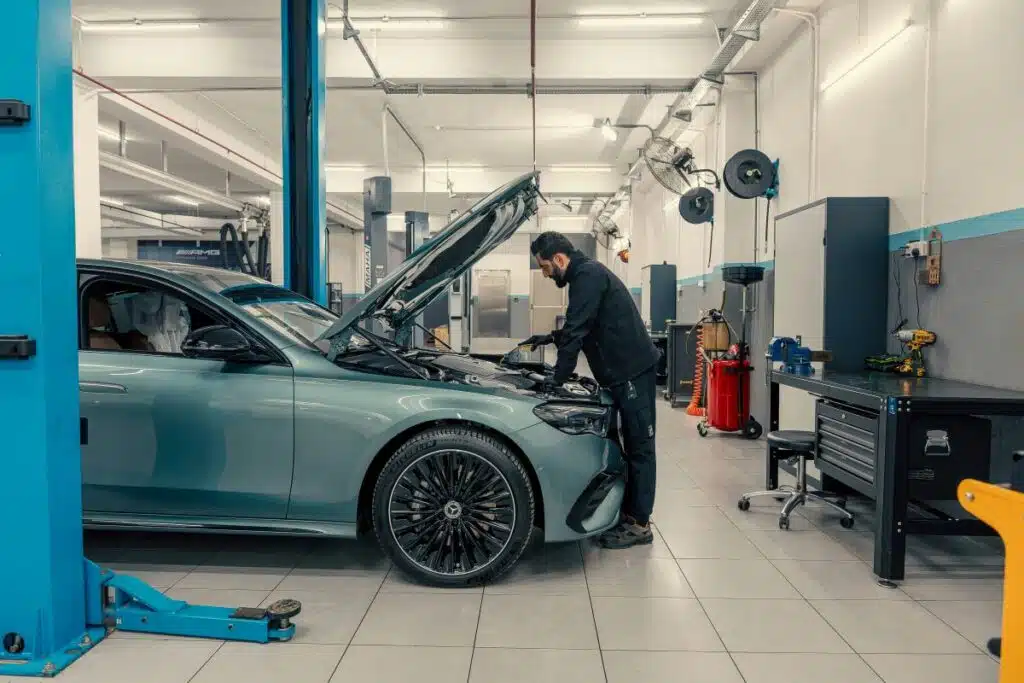
Professional auto noise diagnosis may include a road test, visual inspection, lift inspection, brake inspection, suspension check, steering inspection, and engine compartment inspection. The technician may try to recreate the sound under the same conditions you described.
This process helps avoid guessing. Replacing parts without confirming the cause can waste time and money. A proper diagnostic inspection helps identify the issue and gives you a better understanding of what repairs may be needed.
If your vehicle is also shaking, an auto vibration diagnosis may be performed at the same time. Noise and vibration often happen together, especially when the concern is related to tires, wheels, brakes, suspension, engine mounts, or drivetrain parts.
When A Noise Is Connected To A Warning Light
Sometimes a strange noise happens along with a check engine light. If your check engine light is on and your vehicle is making noise, running rough, shaking, or losing power, it is important to schedule check engine light services as soon as possible.
A check engine light can be caused by many issues, including ignition problems, emissions concerns, fuel system issues, sensor failures, or engine performance problems. If the light is flashing, the vehicle should not be driven without professional guidance because it may indicate a more serious issue.
For drivers who need Auto Diagnostics & Check Engine Light Services In Richmond, Magallanes Automotive Repair can inspect the warning light, scan for codes, and perform additional testing to determine what is causing the concern.
Auto Noise & Vibration Diagnostics In Richmond, CA
If your vehicle is making a sound that is hard to locate, Auto Noise & Vibration Diagnostics In Richmond, CA can help. A diagnostic appointment allows a technician to listen to the concern, inspect key systems, and determine whether the noise is related to the brakes, suspension, steering, engine, tires, exhaust, or another area.
This is especially helpful when the noise only happens under certain conditions. For example, if the sound happens only at highway speeds, only while turning, or only when braking, the technician can focus on the systems most likely to cause that symptom.
Do Battery Problems Cause Noises?
A failing battery does not usually cause driving noises, but it can create sounds during startup. Clicking when turning the key may be related to a weak battery, starter issue, or poor electrical connection. If your car clicks but does not start, auto battery testing may be needed.
A car battery test can help determine whether the battery has enough power to start the vehicle. If the battery is good, further auto diagnostics may be needed to inspect the starter, alternator, wiring, or charging system.
Schedule A Car Noise Inspection In Richmond, CA
Finding where a noise is coming from in a car starts with paying attention to when it happens, but a professional inspection is the best way to confirm the cause. Strange sounds can come from many systems, including brakes, suspension, steering, tires, engine components, exhaust parts, or electrical systems.
Magallanes Automotive Repair provides auto noise diagnosis, auto vibration diagnosis, auto diagnostics, check engine light services, auto battery testing, car battery test services, and general vehicle inspections for drivers in Richmond, CA.
If your vehicle is making a new noise, shaking while driving, showing a check engine light, or not operating normally, call 510-235-6202 today or send a message through the website to schedule service with Magallanes Automotive Repair.